Installation at Casco, Utrecht, 1996, at the exhibition Coop, curated by Mariette Dolle and Lisette Smits.
It was in 1996 that Stefano W. Pasquini chose to bring a significant fragment of Italian history to Utrecht, in the Netherlands, through an installation featured in a group exhibition at the Casco Art Institute.
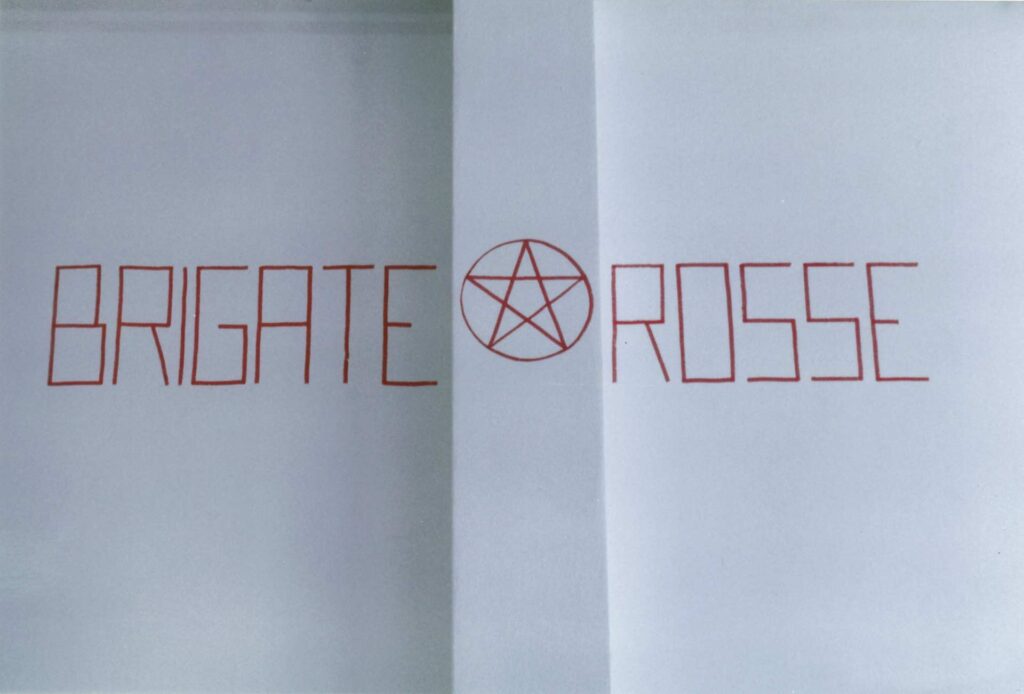
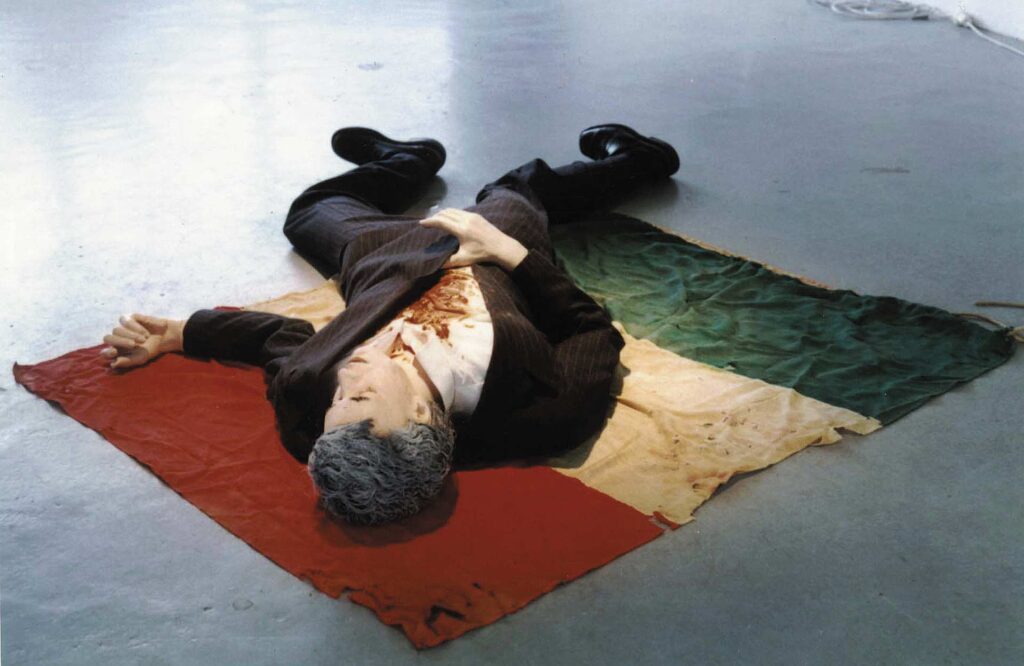
Surrounded by white walls, a mannequin lies on an aged and timeworn Italian flag, its royal crest carefully removed, reproducing the lifeless body of Aldo Moro. On the wall, in red marker, the words BRIGATE ROSSE are scrawled. In an adjacent room, a video plays, recounting the story of the Italian statesman to visitors.
Here, Pasquini stages a reflection on one of the most traumatic political assassinations in Italy’s history, confronting it at a crucial cultural moment: the same year, a documentary had just been released detailing the discovery of the letters Aldo Moro wrote during his 55 days of captivity, letters in which he expressed feeling abandoned by his own party and condemned to certain death.
Through this installation, Pasquini invites the viewer to confront not only the brutal event itself but also the deeper political and emotional wounds it left behind.
È nel 1996 che Stefano W. Pasquini decide di portare uno spaccato importante della storia italiana ad Utrecht, in Olanda, con un’installazione in una mostra collettiva al Casco Art Institute.
Circondato da pareti bianche un manichino riproduce il cadavere di Aldo Moro poggiato su un’antica bandiera italiana, ingiallita e rovinata dal tempo, dalla quale è stato scucito lo stemma reale italiano. Sul muro si erge, in pennarello rosso, la scritta BRIGATE ROSSE, mentre in una stanza adiacente un filmato racconta per i visitatori la storia del politico italiano.
Pasquini qui mette in scena una riflessione su un omicidio politico che ha segnato la storia italiana e la porta avanti in un momento cruciale: infatti, nell’anno di questa installazione, era da poco uscito un documentario che raccontava il ritrovamento delle lettere che Aldo Moro scrisse durante i suoi 55 giorni di prigionia, dove racconta di come si sentisse abbandonato dai suoi stessi compagni del partito e condannato a morte certa.